Mongi Higgs / Recent Works
CEISPR(Cas mit Schwingungsdämpfer chinesischer Bauart
2023, Acrylic, Spray Paint, Ink and Crayons on canvas/300 x 175 cm
Mal was Anderes
2023, Acrylic, Spray Paint, Ink , on canvas/155 x 185 cm
Stop the Dictatorship of Blossom
2022, Acrylic, Ink and crayons on canvas/300 x 155 cm
Meryth ohne Stuhl; Hans repariert ihn gerade. Bald gibt es Spargel.
2023, Acrylic on canvas/185 x 155 cm
Sheep don’t dance to the left/
2022, Acrylic on canvas/150 x 160 cm
(left) Brett vorm Kopf /
2022, monotype / 50 x 70 cm
(right) Boxer boy /
2022, monotype / 50 x 70 cm
Gurkenflieger /
2022, Acrylic on cardboard /150 x 150 cm
(left) When your body wants to disco /
2022, Ink, acrylic on canvas /120 x 160 cm
(right) The examination of the honorable James Watt or the blue piston is fine /
2022, Ink, acrylic on canvas /200 x 150 cm /
Jorinde und Joringel; früher Single. /
2022, Ink, acrylic felt pen on canvas /200 x 155 cm /
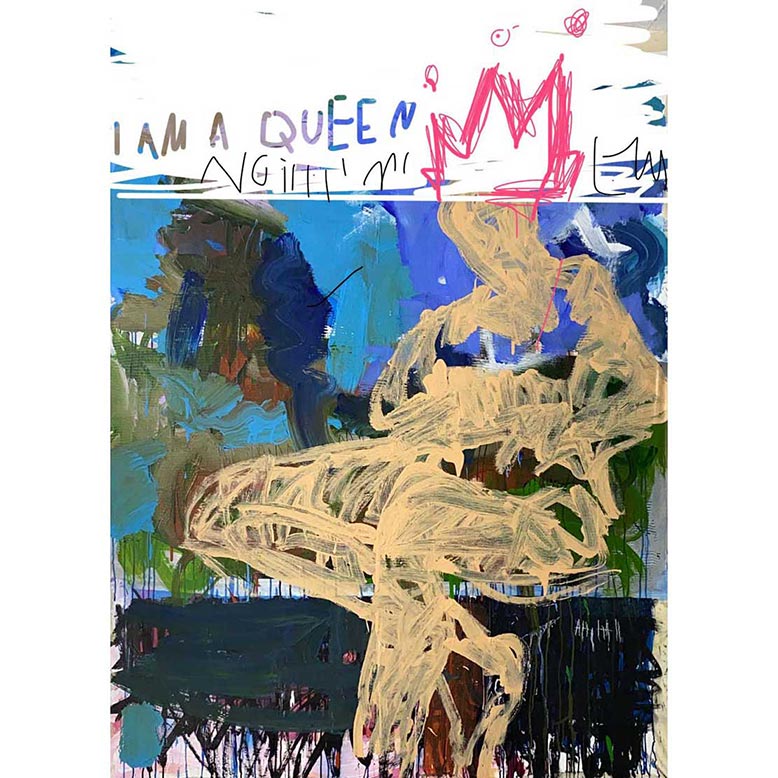
I am a queen. Nothing else. /
2022, Acrylic, acrylic felt pen and ink on canvas /200 x 155 cm /
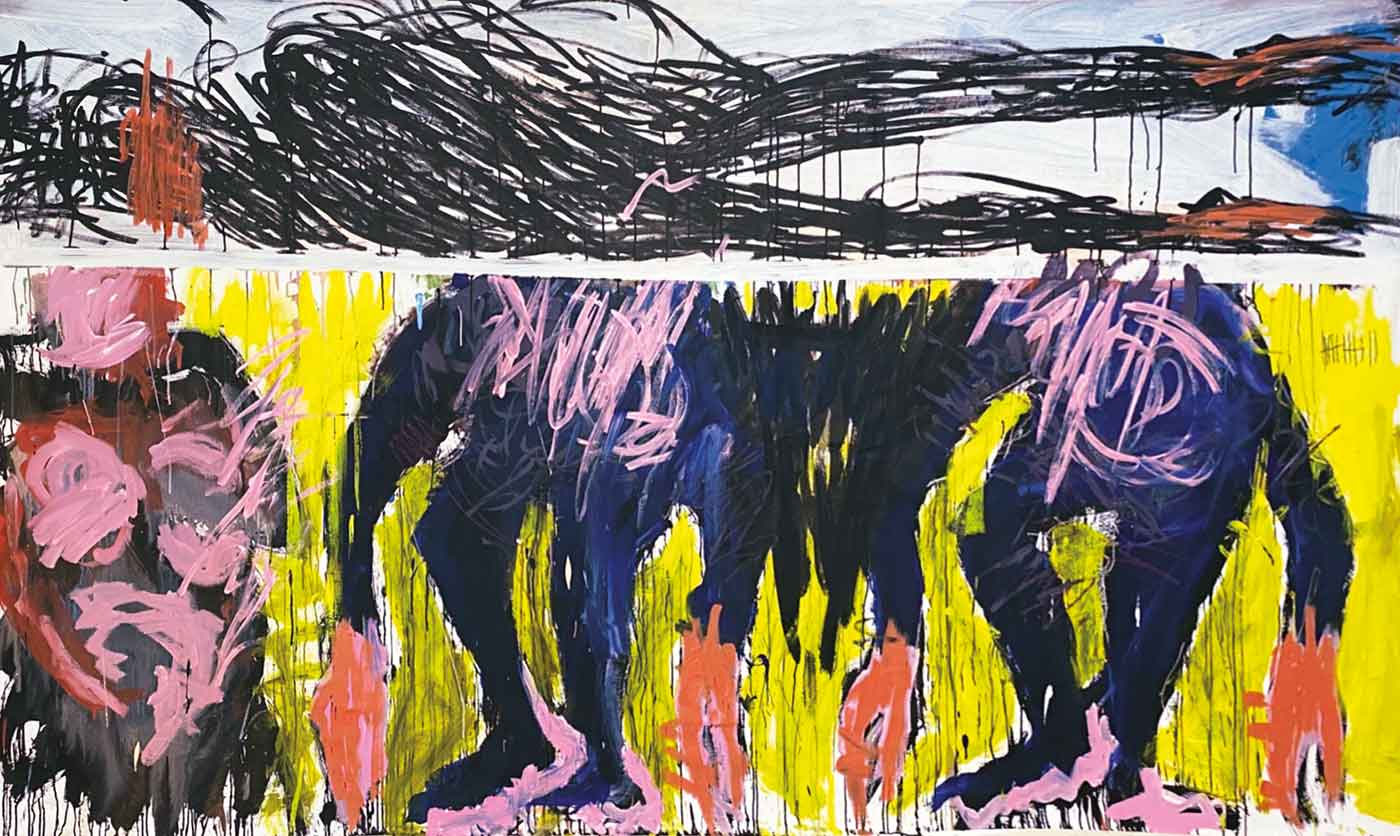
FIER FREUNDE FLEISCHESSER /
2021, Acrylic and ink on canvas /270 x 155 cm /
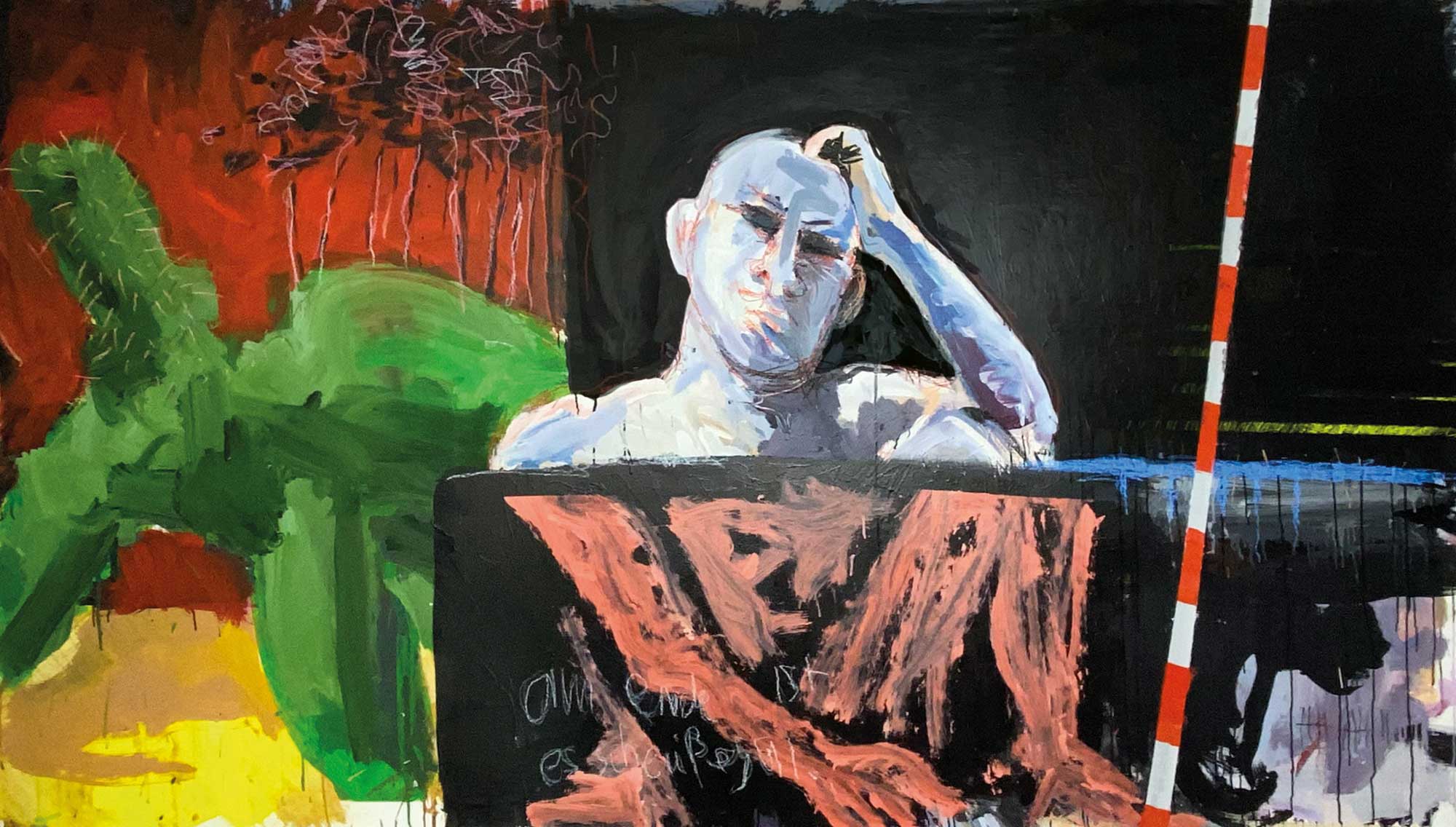
DER GRÜNE HUND MIT DEM KAKTUSSCHWANZ; DER LANDVERMESSERSINNIERT ÜBER SCHOPENHAUER /
2022, Acrylic and ink on canvas /310 x 160 cm /
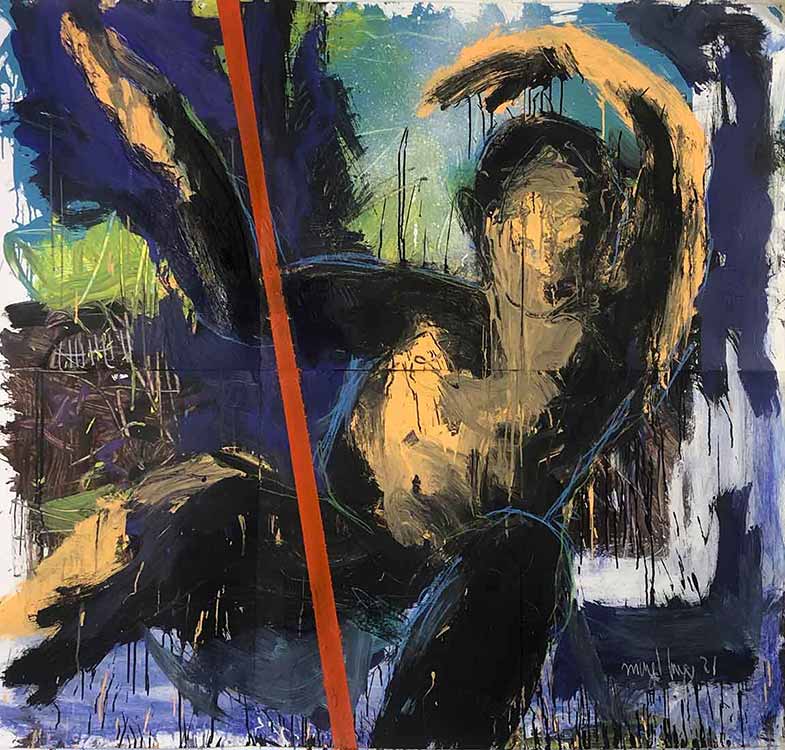
Traktorist IV aus dem befreundeten sozialistischen Bruderland nach der Sauna auf dem Stoppelfeld /
2021, Acrylic on cardboard /6 x 50 x 70 cm /
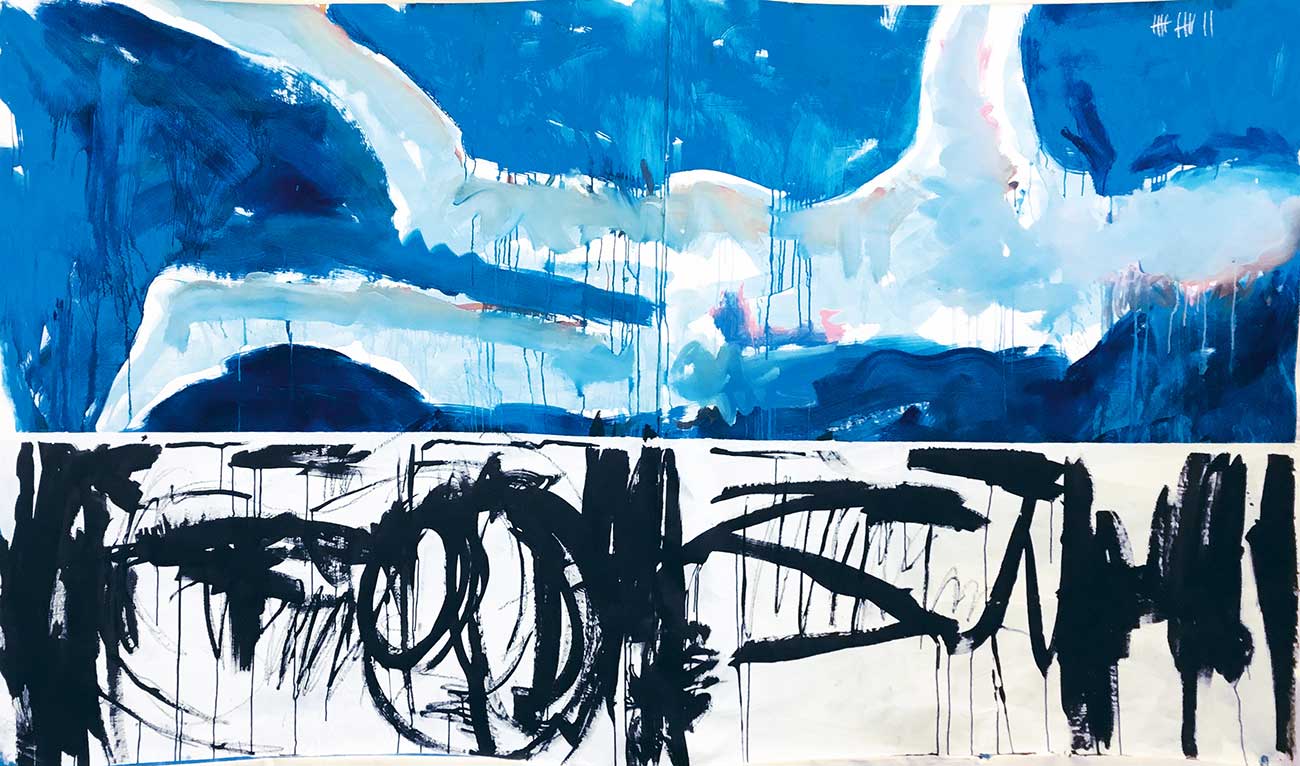
Man kann auch im Wasser weinen / 2021, Acrylic and ink on canvas / 300 x 180 cm
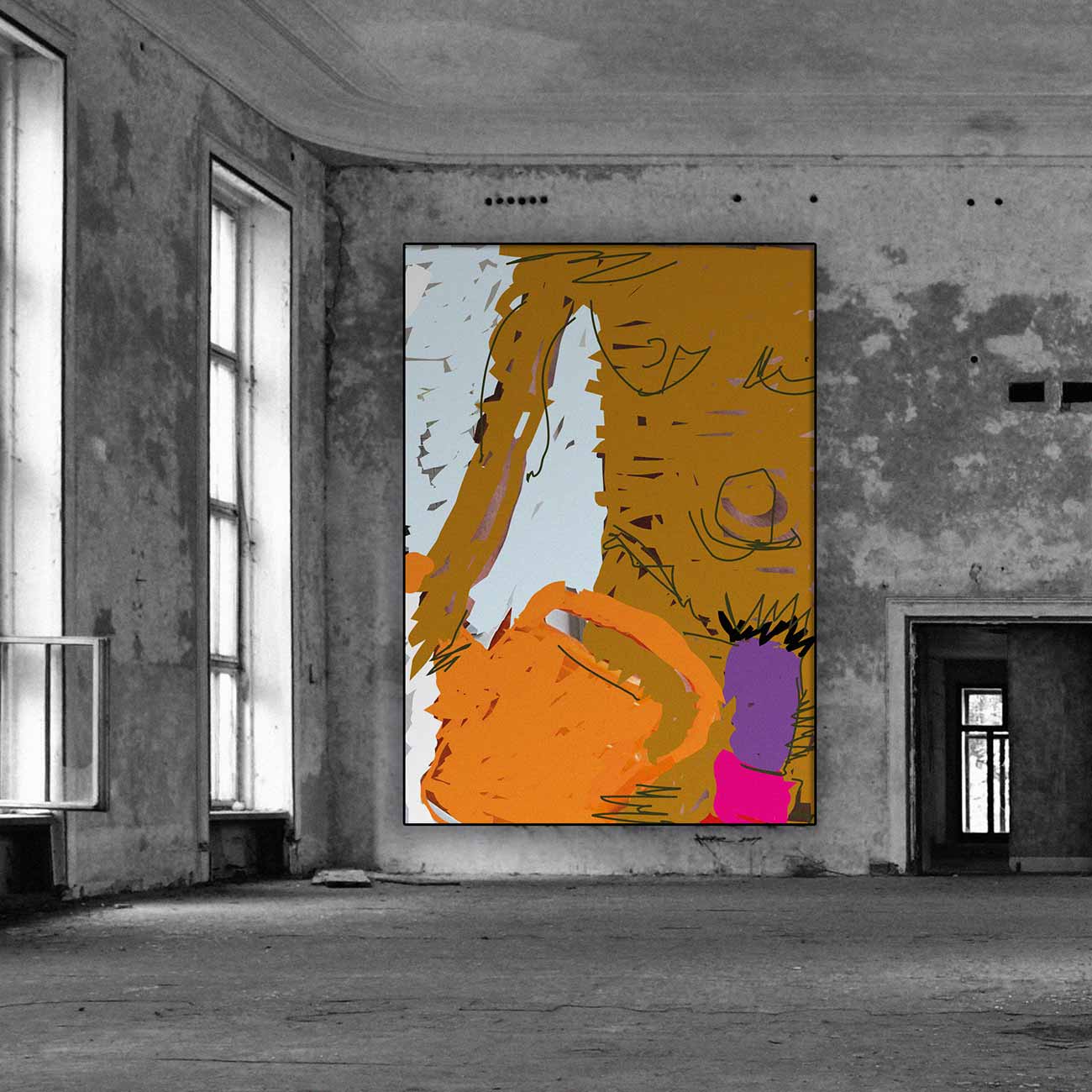
Olifant
2021, Acrylic and photocopy on canvas /400 x 165 cm
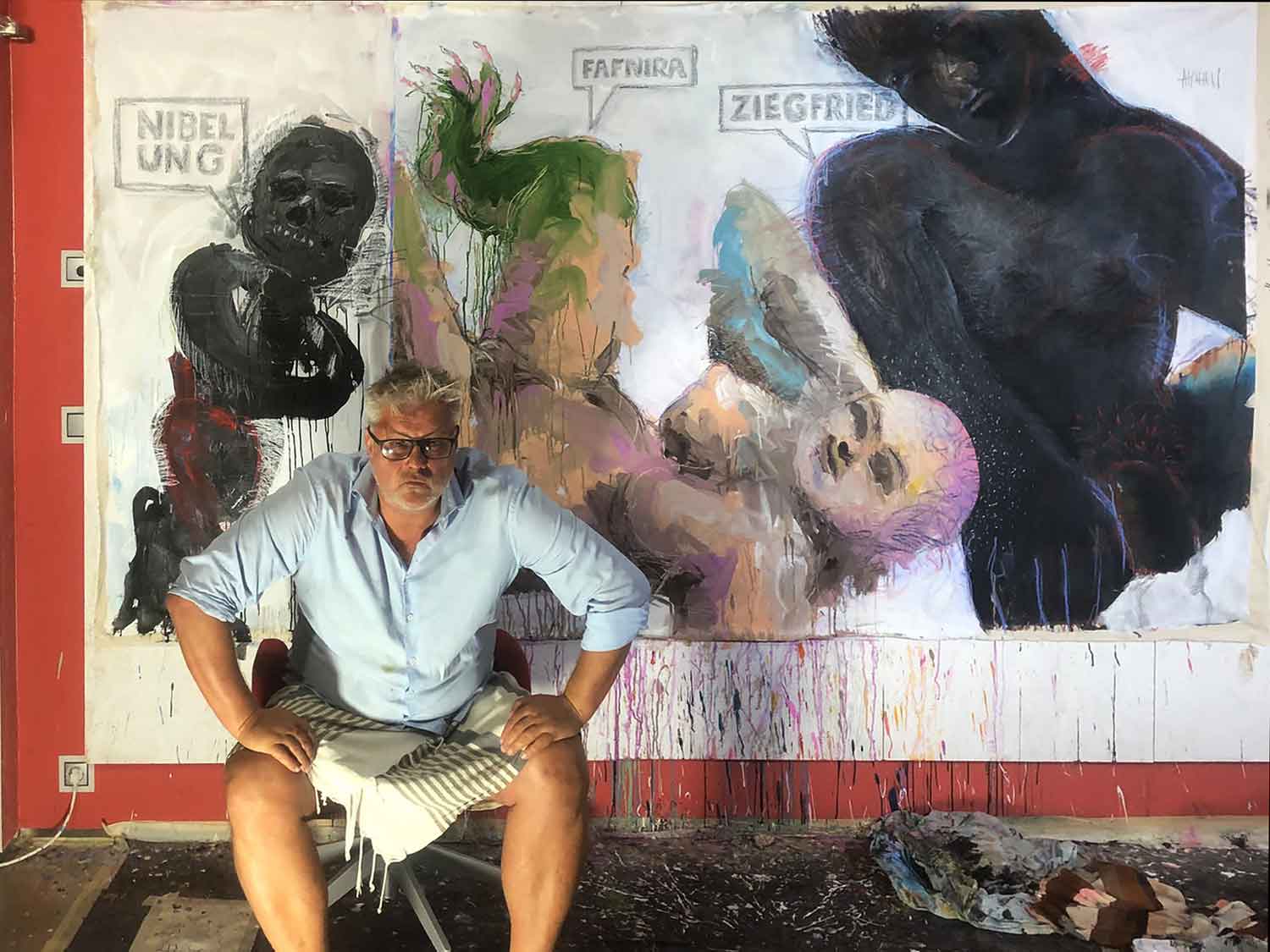
ZIEGFRIED – Love your Dragon/
2021, Acrylic, ink and chalk on canvas / 300 x 160 cm

Messalina / 2021, Acrylic and acrylic-pen on cardboard /160 x 150 cm /
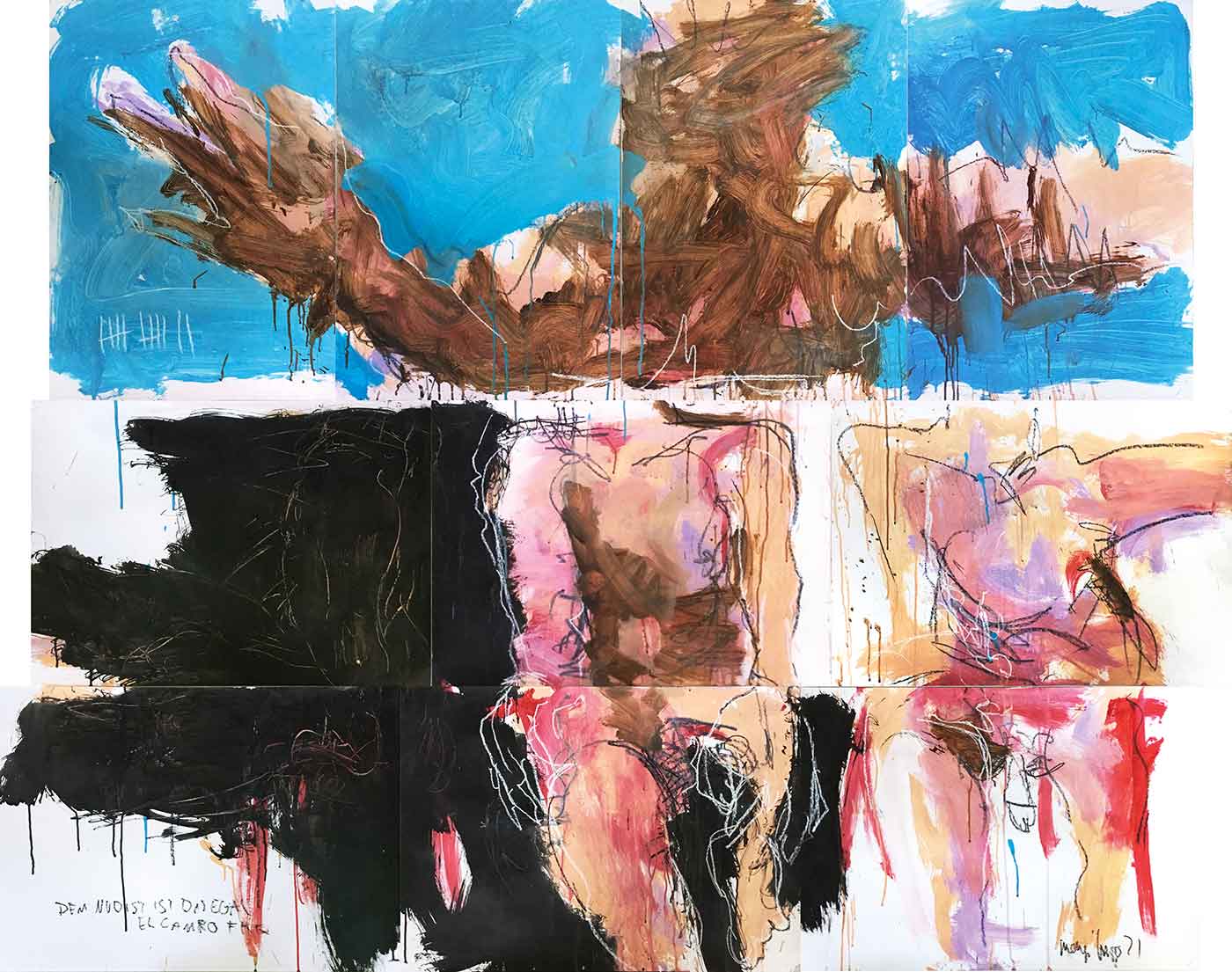
Dem Nudisten ist es egal, El Campo FKK / 2021, Acrylic, ink and chalk on cardboard / 220 x 170 cm /
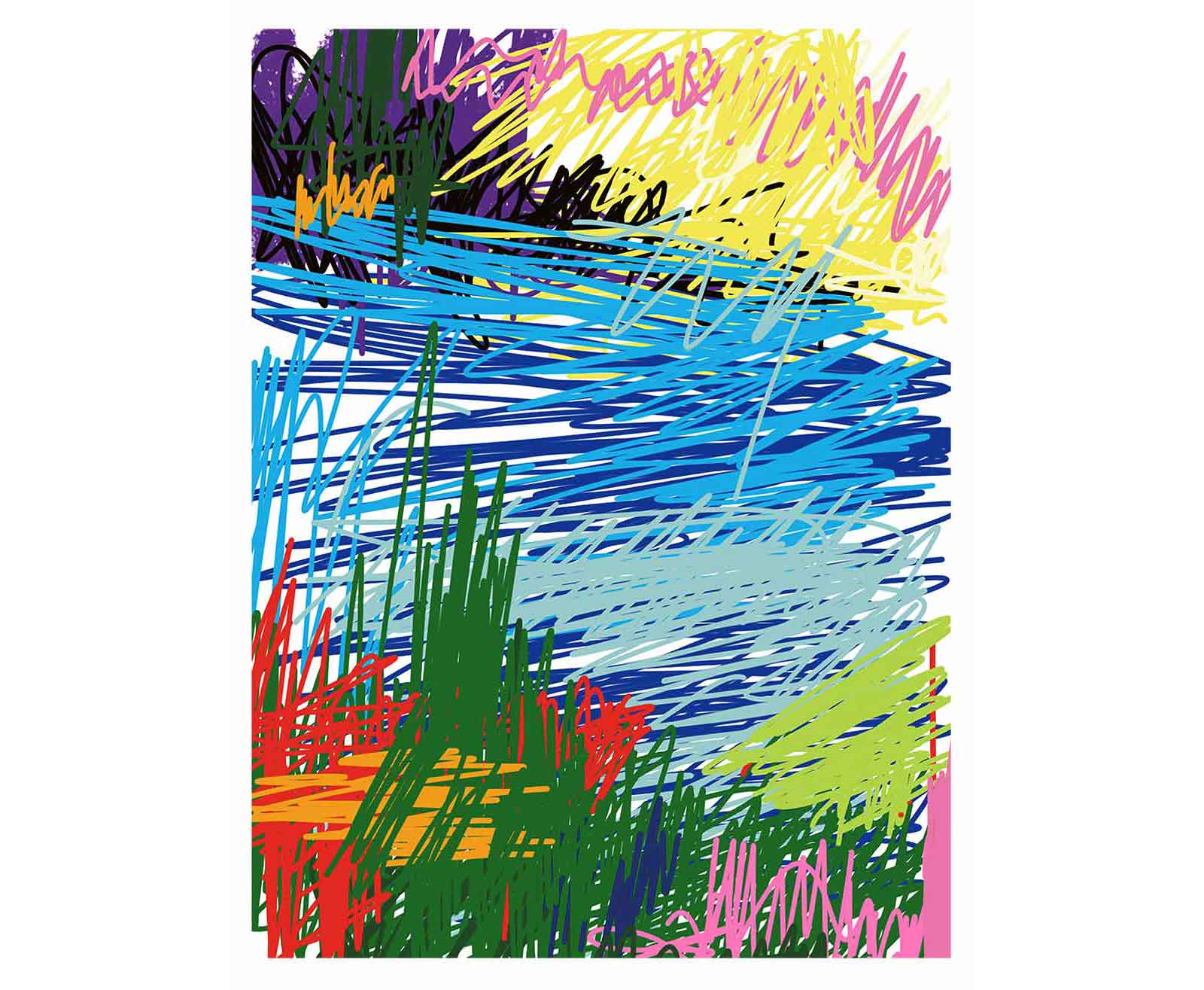
Krokodilschwimmen / 2021, Digital Painting, Giclee-Print-Edition: 12 / 70 x 100 cm
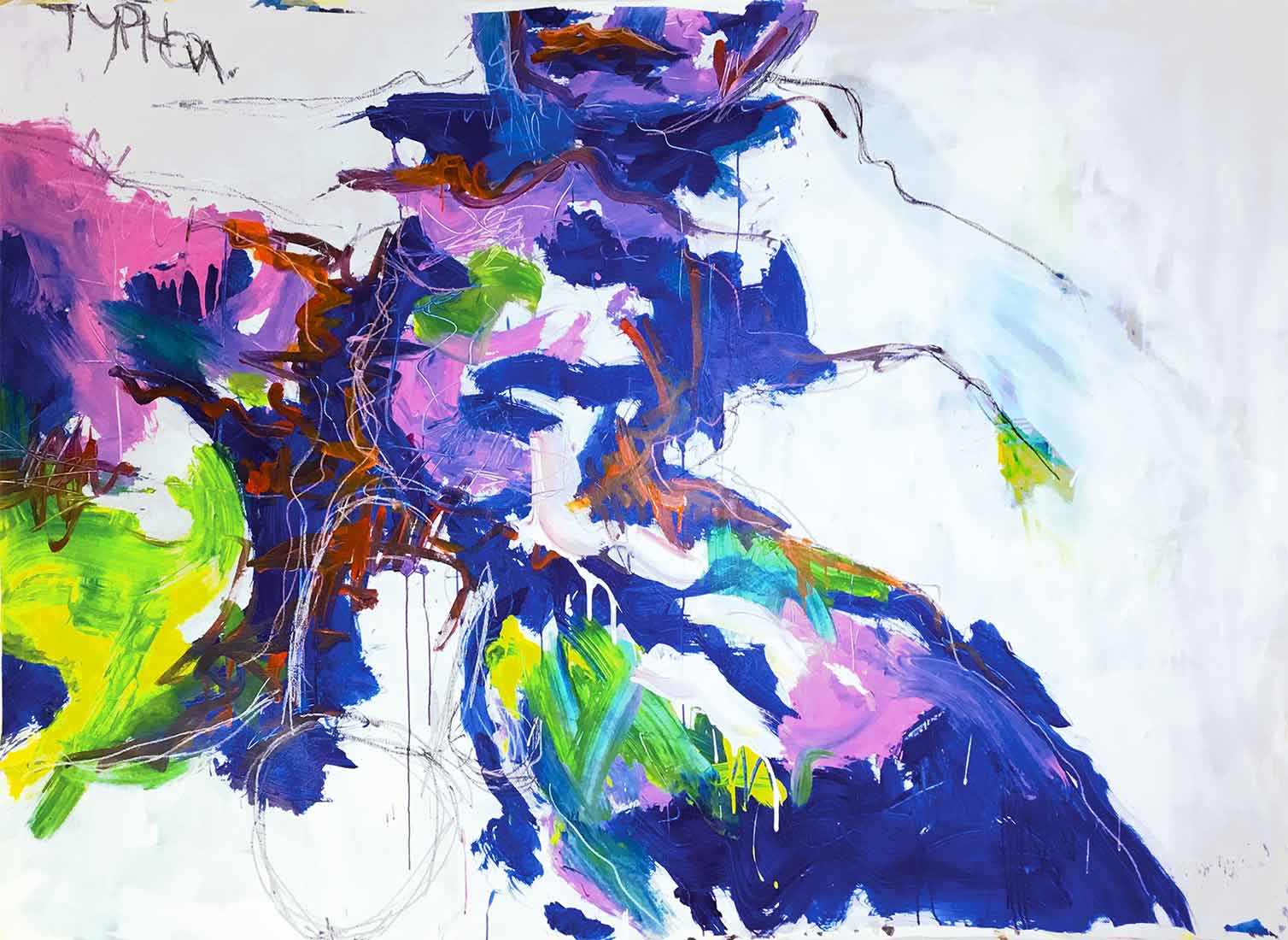
TYPHON SUPERSTAR / 2020, Acrylic and chalk on canvas / 240 x 160 cm /
Atemlos – Meryth tanzt mit rotem Haar; Hans wartet draussen
2023, Acrylic, Spray Paint, Ink and Crayons on canvas/120 x 120 cm
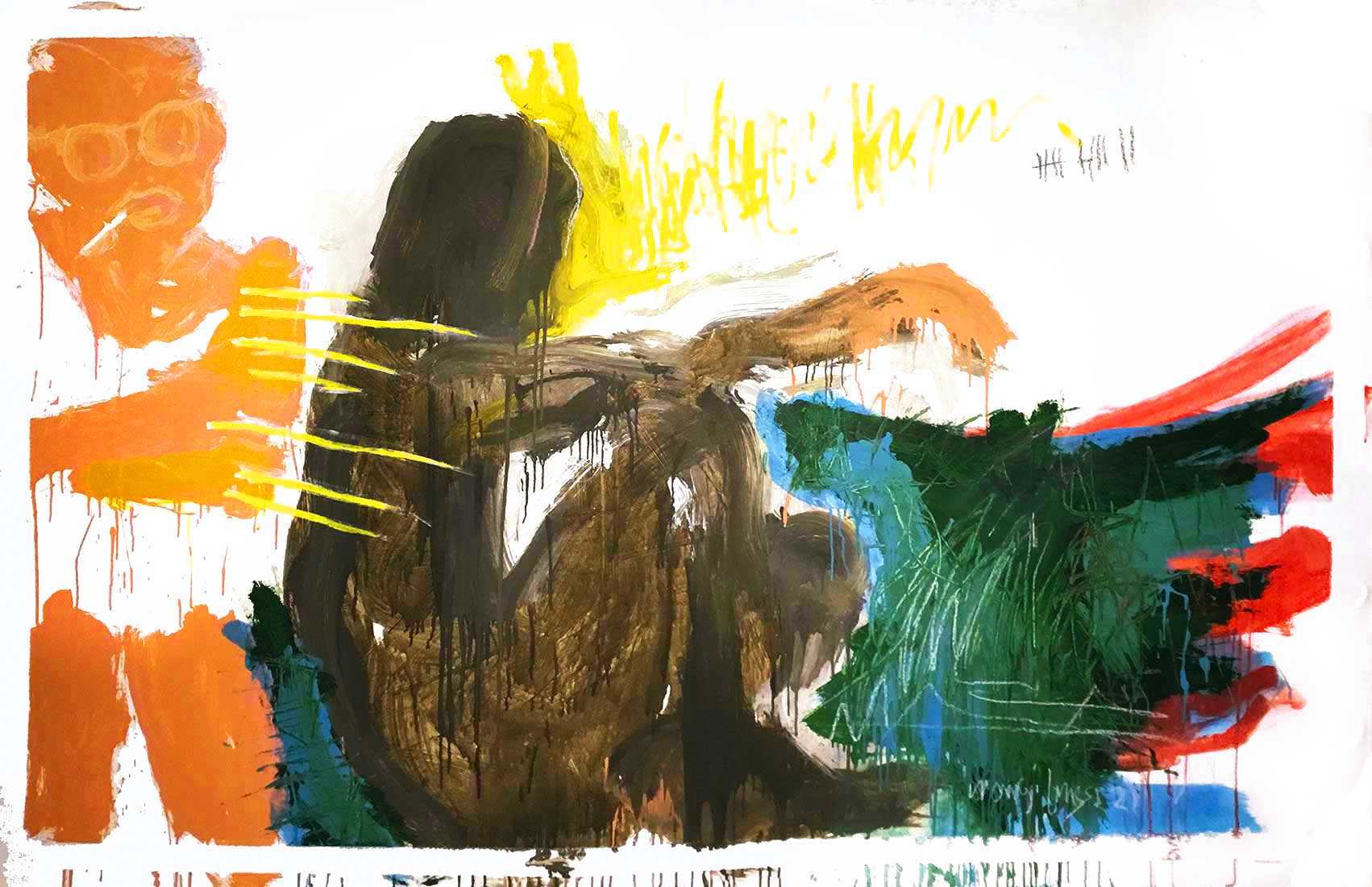
Venus (menopause) having a conflict with Adonis / 2021, Acrylic on canvas / 240 x 145 cm
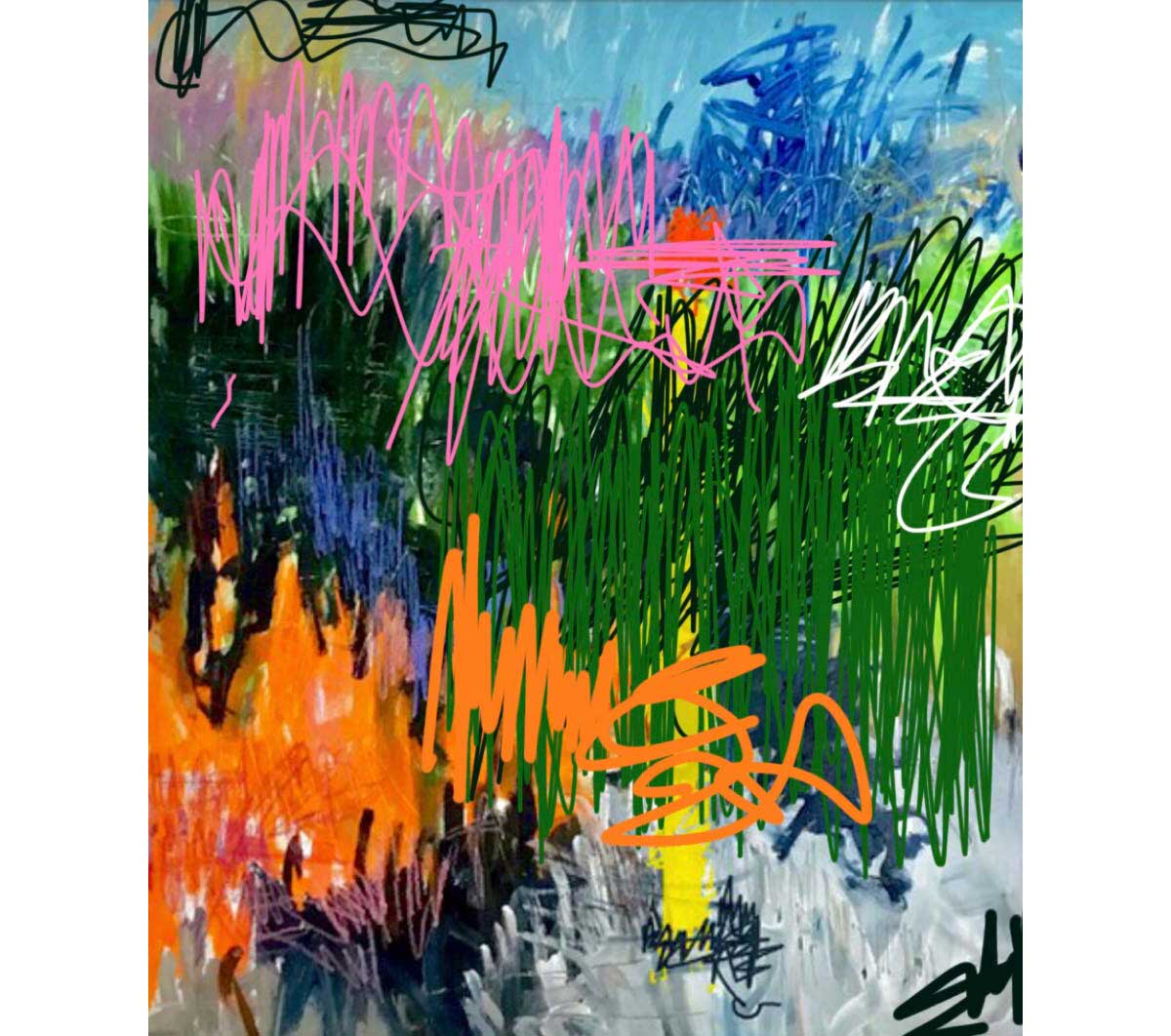
CORN | MAIS / 2021, Acrylic and acrylic-pen on canvas /150 x 180 cm /

Nude one /
2018, Acrylic on sketching paper / 70 x 100 cm /
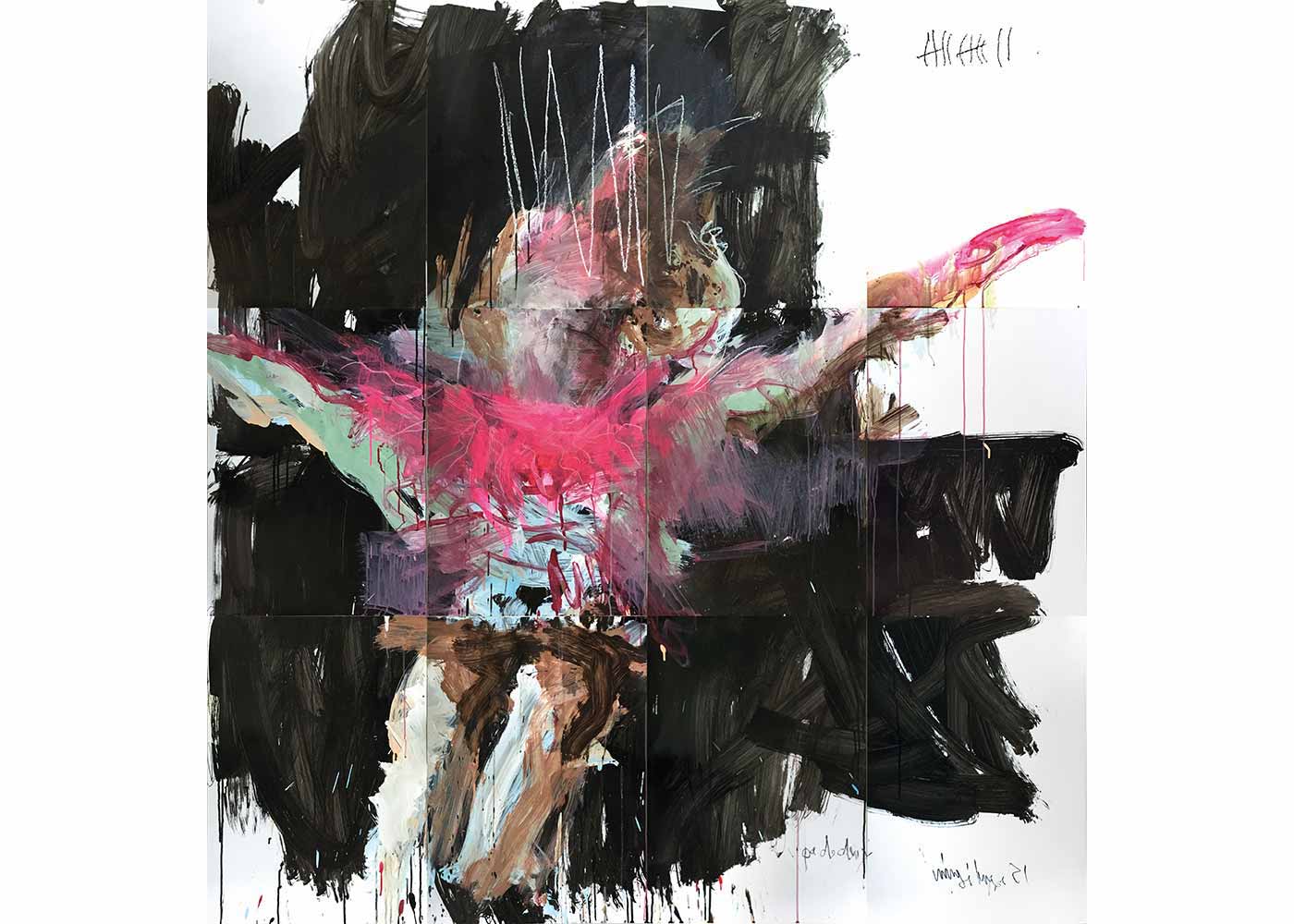
Pas de deux / 2021, Acrylic, ink and chalk on cardboard / 200 x 210 cm /
Nieselregen, 5 Grad. Scheiße der Lidstrich verwischt.
2022, Acrylic on Hahnemühle/140 x 180 cm
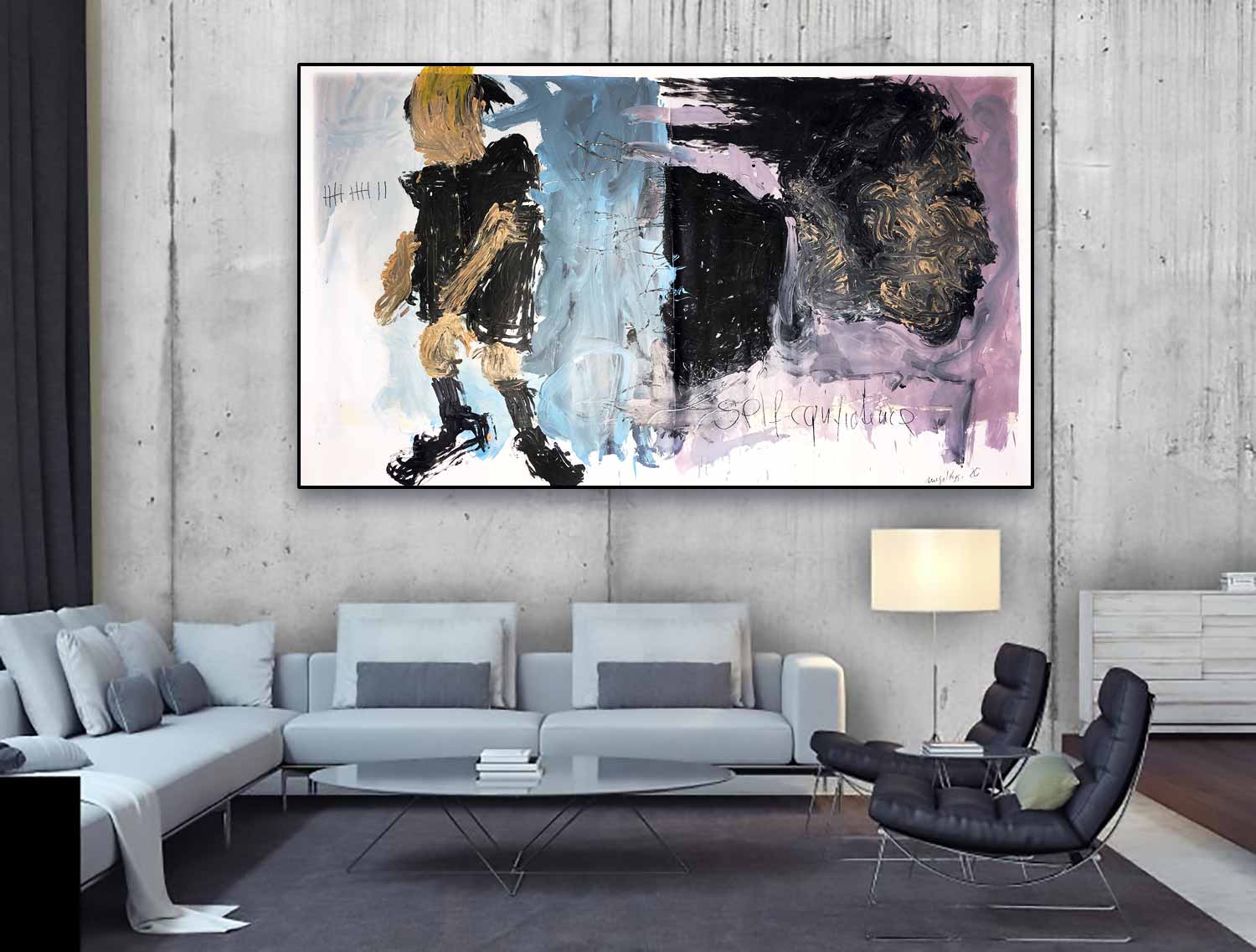
SELF CONFIDENCE / 2020, Acrylic on Hanhnemühle (300 g) / 300x 180 cm /
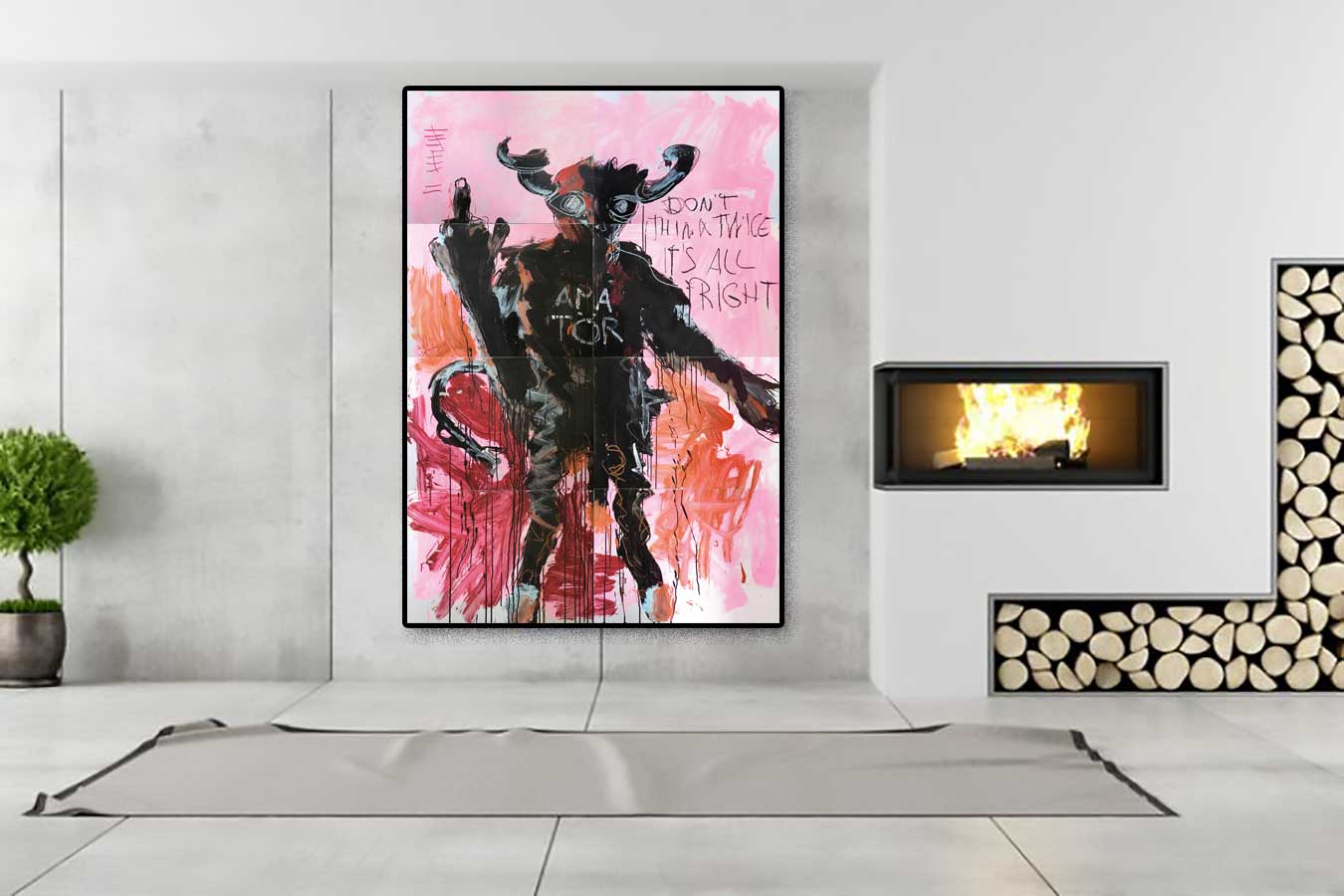
AMATÖR – Don’t think twice / 2021, Acrylic, ink and chalk on cardboard / 140 x 200 cm /

Shave ur head and man up, girl. / 2021, Acrylic on canvas / 160 x 170 cm /
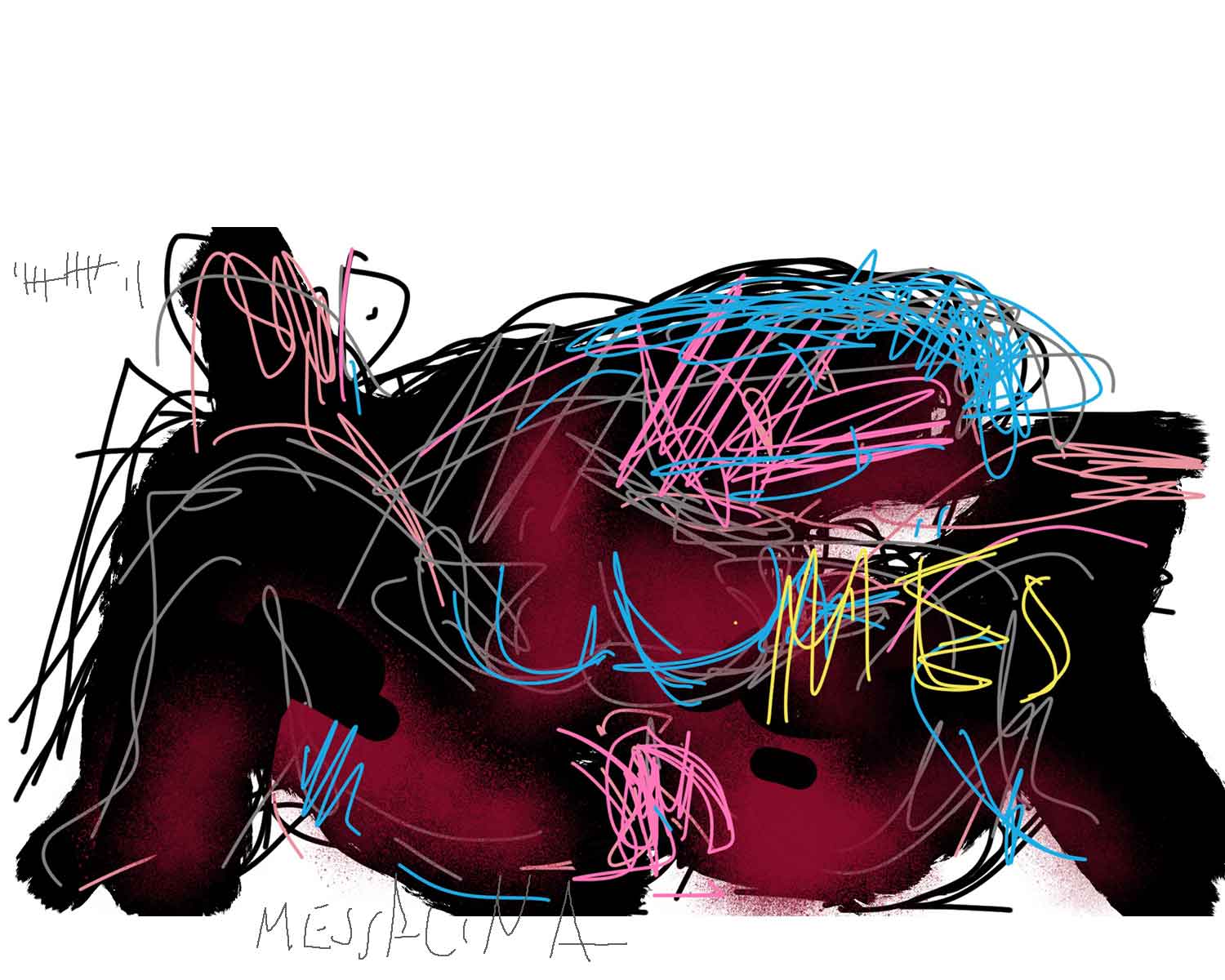
Messalina / 2021, Edition; Giclee-Print on Hanemühle (300 g) / 100 x 70 cm /
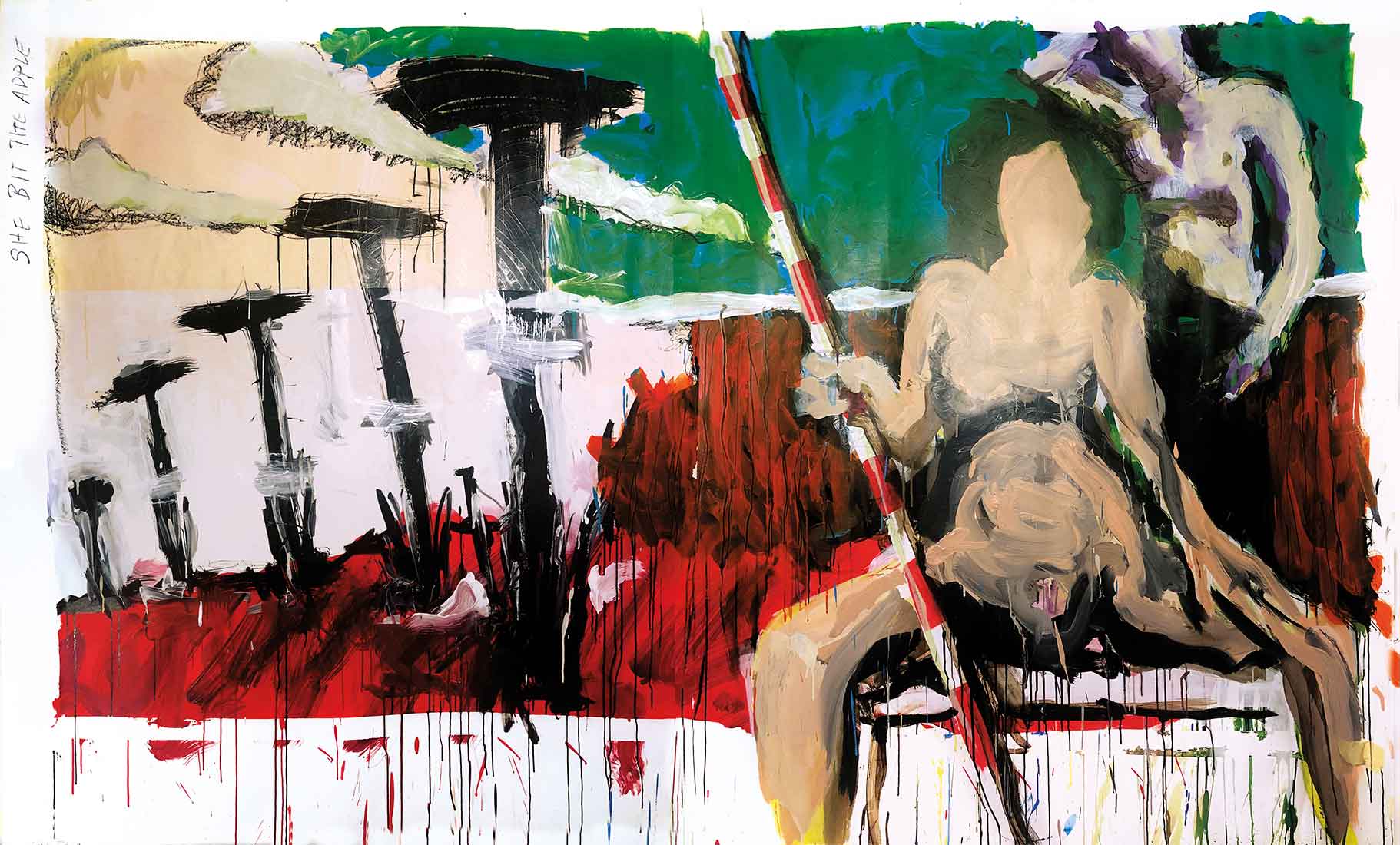
Where is the apple tree? / 2020, Acrylic on Hannemühle (300 g) /300 x 180 cm /
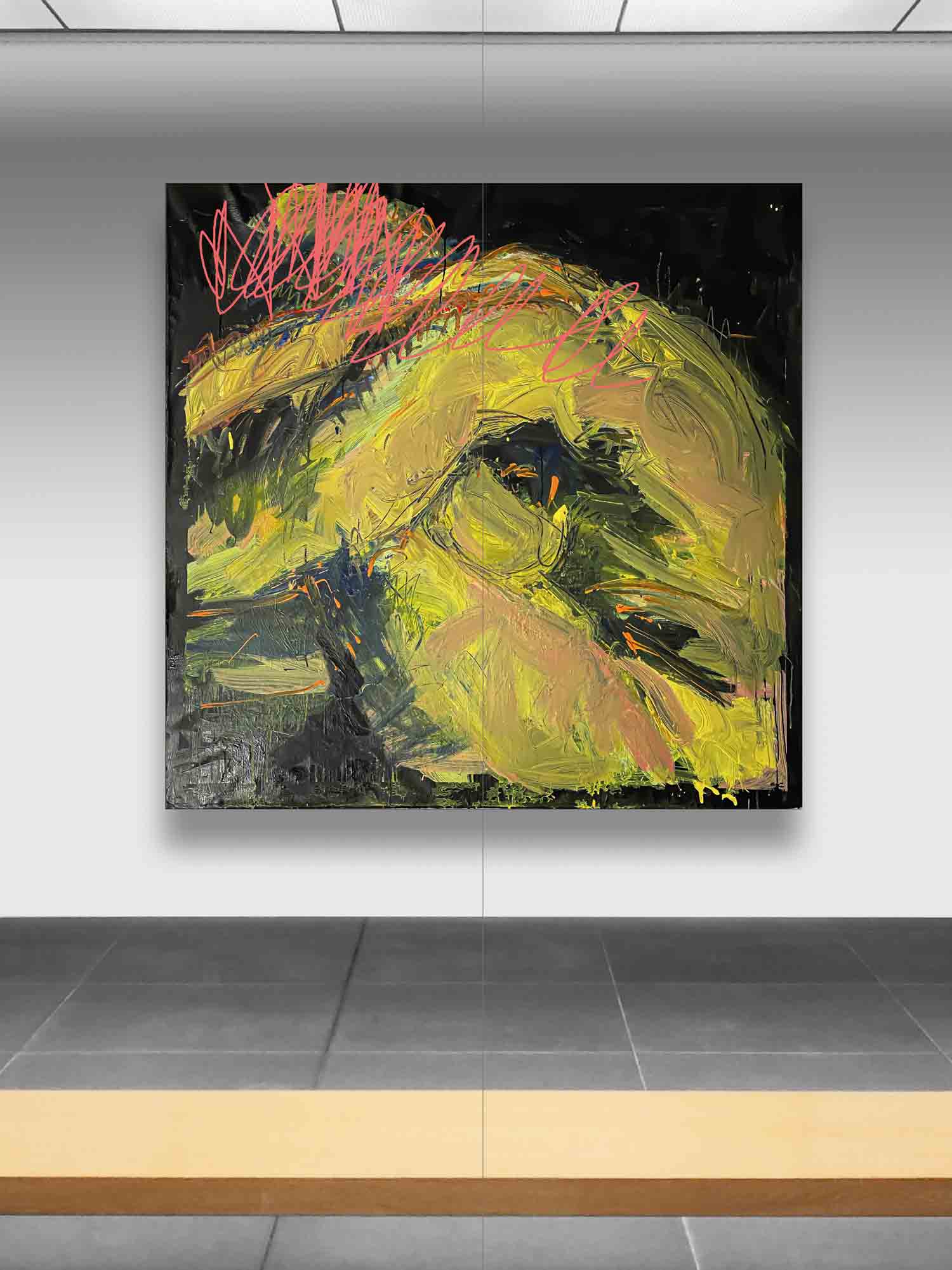
Atemlos – Meryth tanzt mit rotem Haar; Hans wartet draussen
2023, Acrylic, Spray Paint, Ink and Crayons on canvas/120 x 120 cm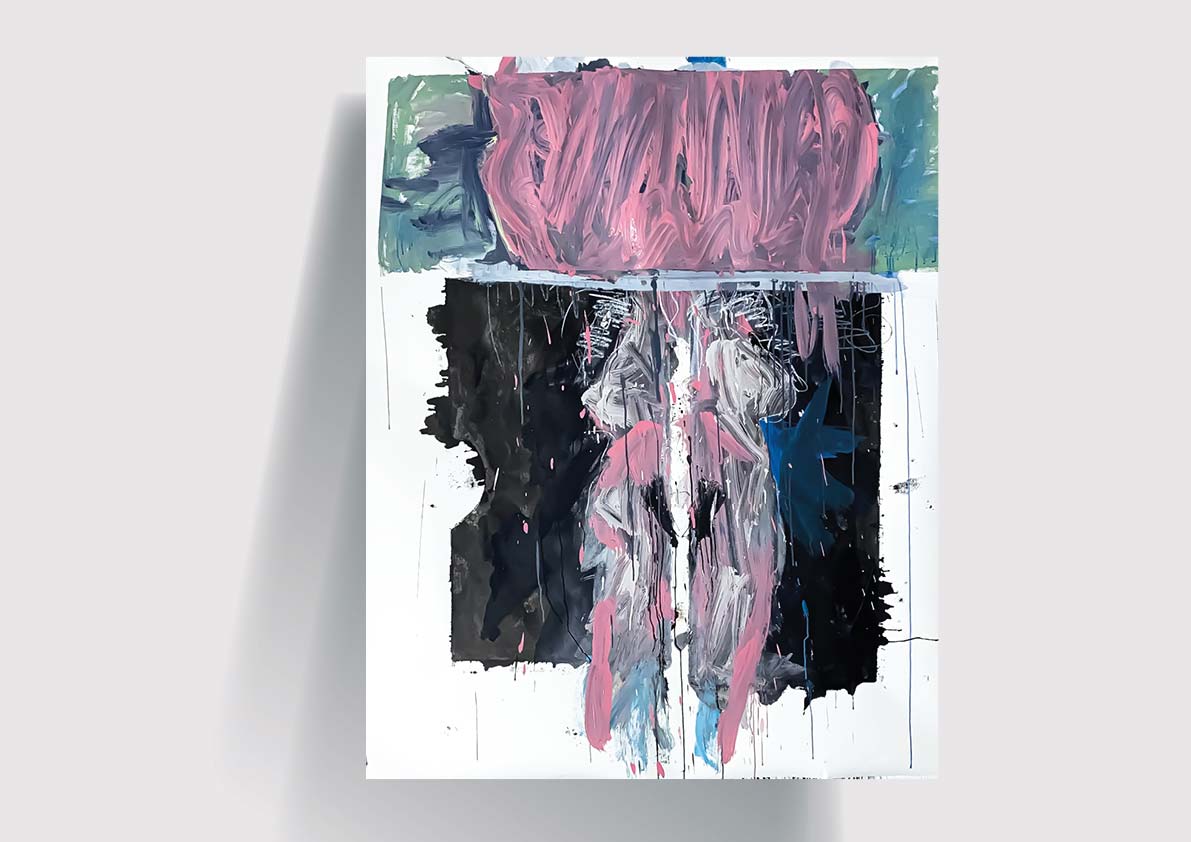
Nieselregen, 5 Grad. Scheiße der Lidstrich verwischt.
2022, Acrylic on Hahnemühle/140 x 180 cm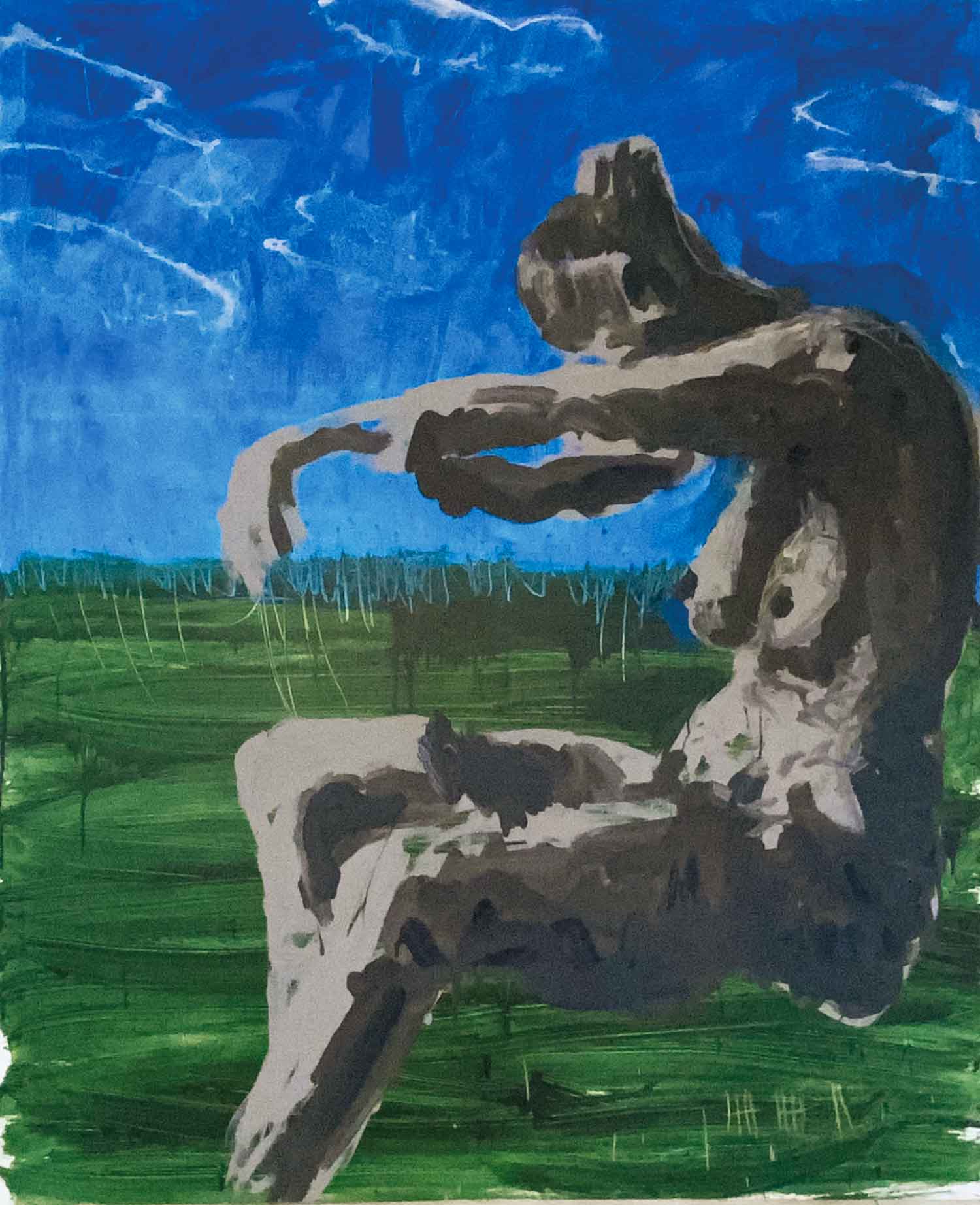
Meryth ohne Stuhl; Hans repariert ihn gerade. Bald gibt es Spargel.
2023, Acrylic on canvas/185 x 155 cm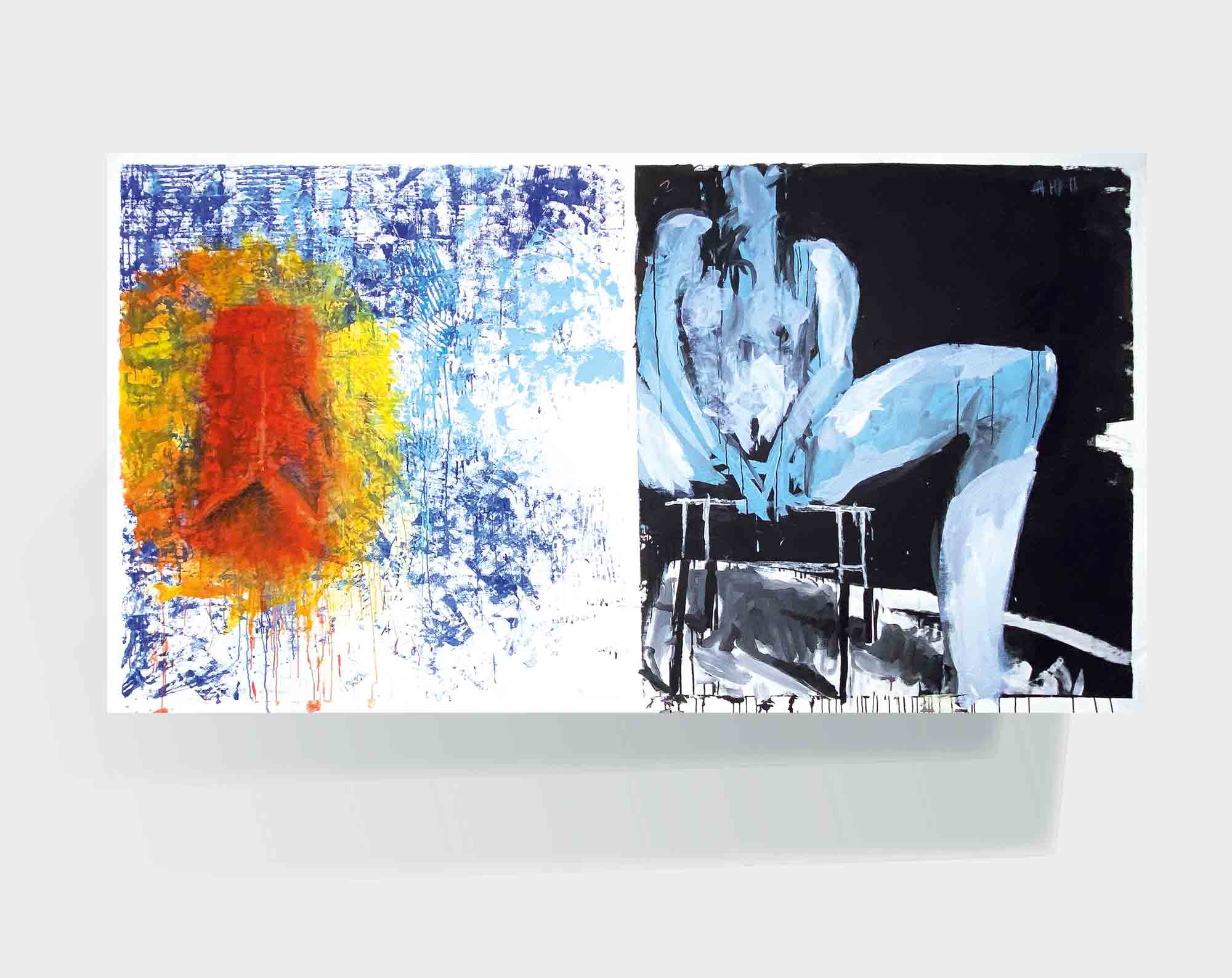
Stop the Dictatorship of Blossom
2022, Acrylic, Ink and crayons on canvas/300 x 155 cm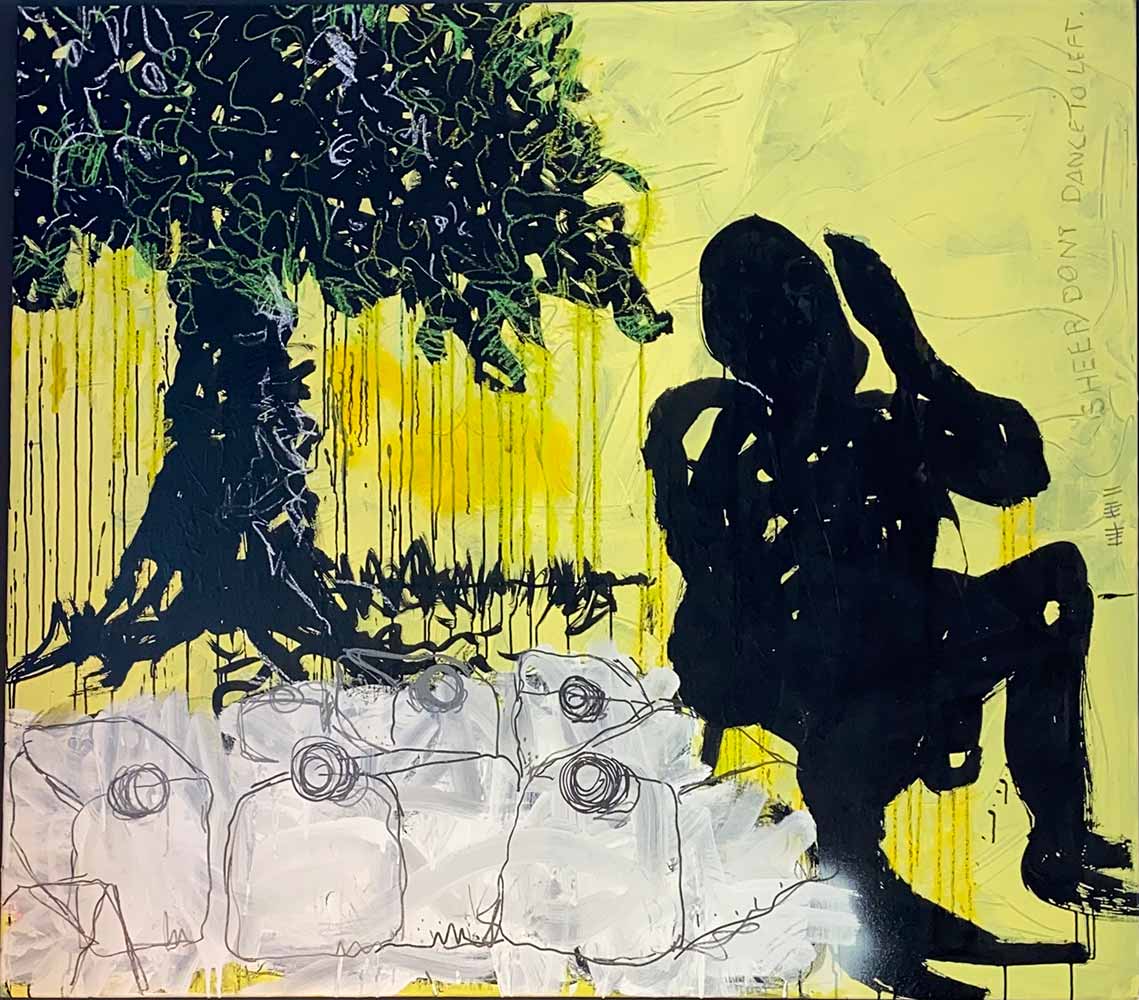
Sheep don’t dance to the left/
2022, Acrylic on canvas/150 x 160 cm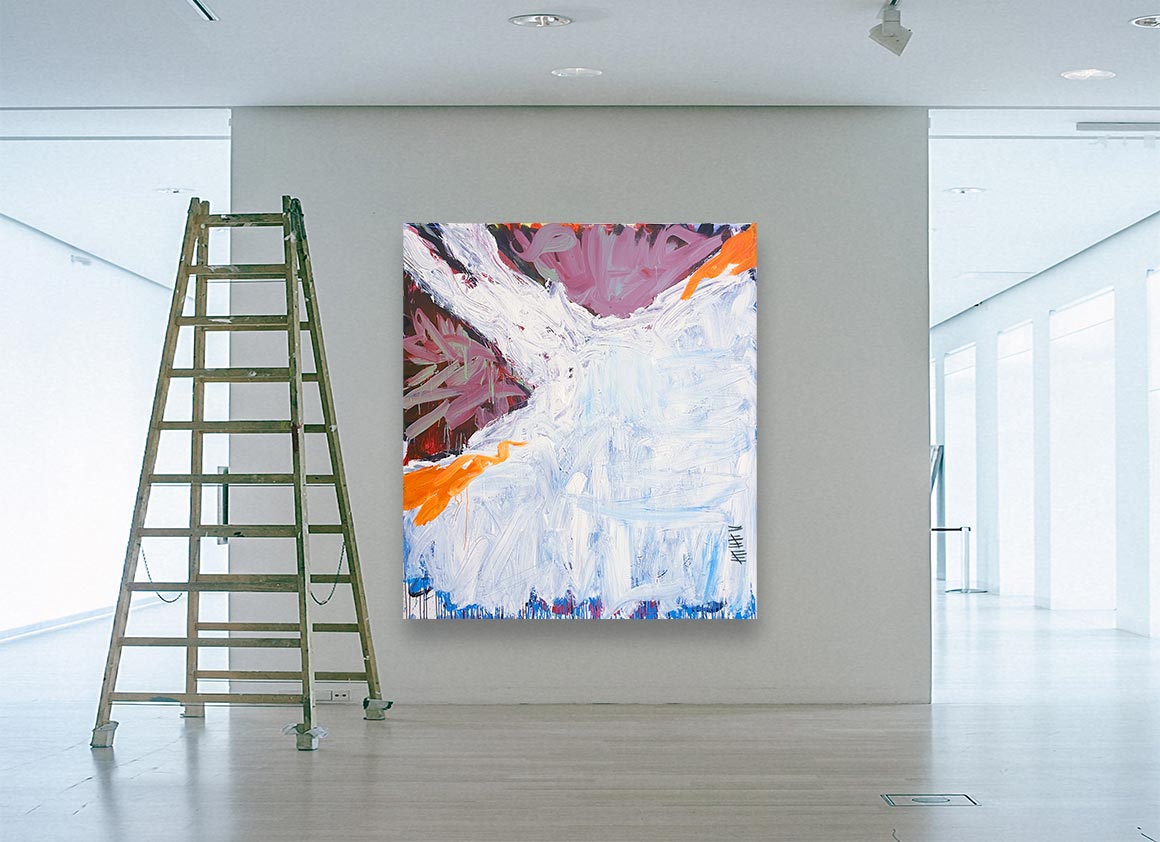
Gurkenflieger /
2022, Acrylic on Cardboard /150 x 150 cm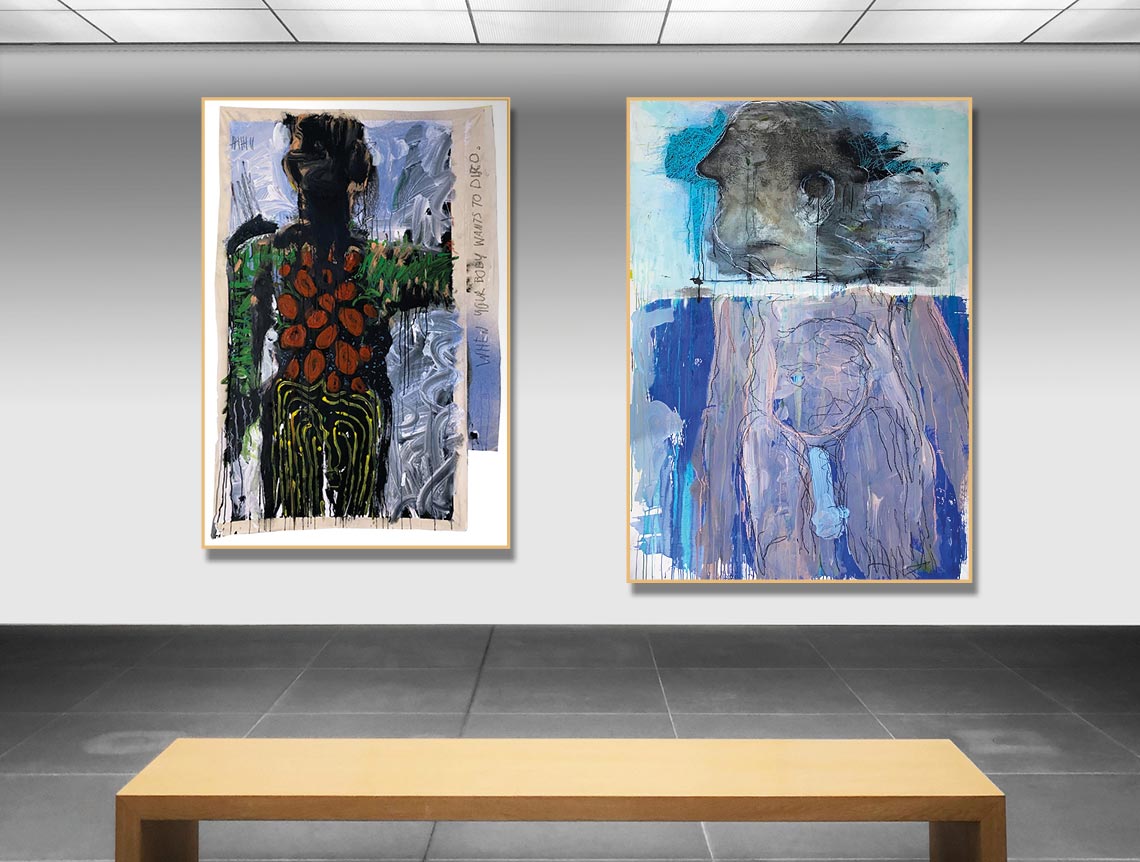
(left) When your body wants to disco /
2022, Ink, acrylic on canvas /120 x 160 cm(right) The examination of the honorable James Watt or the blue piston is fine /
2022, Ink, acrylic on canvas /200 x 150 cm /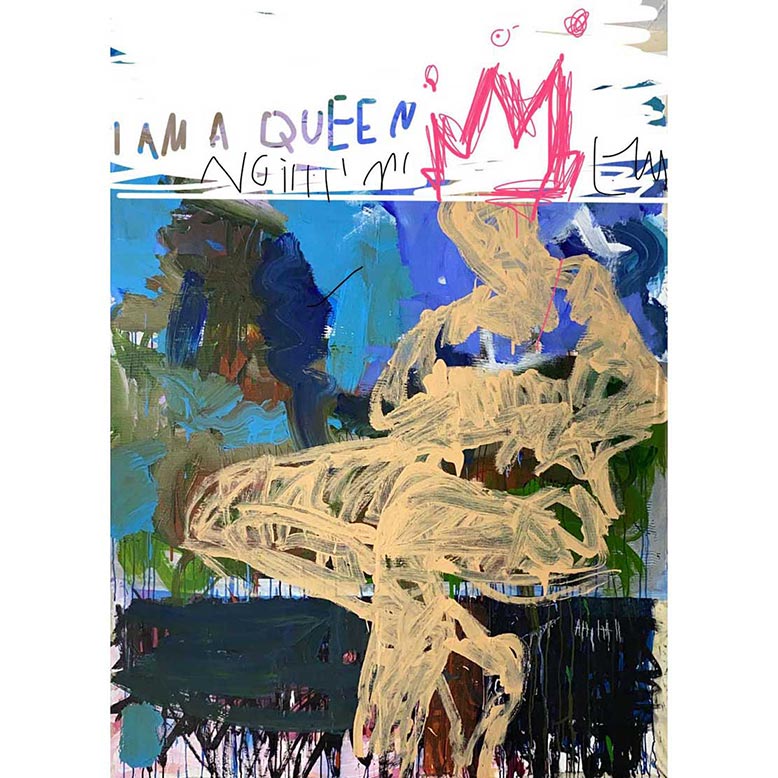
I am a queen. Nothing else. /
2022, Acrylic, acrylic felt pen and ink on canvas /200 x 155 cm /-
FIER FREUNDE FLEISCHESSER /
2021, Acrylic and ink on canvas /270 x 155 cm / -
DER GRÜNE HUND MIT DEM KAKTUSSCHWANZ; DER LANDVERMESSERSINNIERT ÜBER SCHOPENHAUER /
2022, Acrylic and ink on canvas /310 x 160 cm / -
Man kann auch im Wasser weinen /
2021, Acrylic and ink on canvas / 300 x 180 cm -
OLIFANT
2021, Acrylic and photocopy on canvas /400 x 165 cm -
ZIEGFRIED – Love your Dragon/
2021, Acrylic, ink and chalk on canvas / 300 x 160 cm -
Krokodilschwimmen /
2021, Digital Painting, Giclee-Print-Edition: 12 / 70 x 100 cm -
Messalina / 2021, Acrylic and acrylic-pen on cardboard /160 x 150 cm /
-
Dem Nudisten ist es egal, El Campo FKK / 2021, Acrylic, ink and chalk on cardboard / 220 x 170 cm /
-
TYPHON SUPERSTAR / 2020, Acrylic and chalk on canvas / 240 x 160 cm /
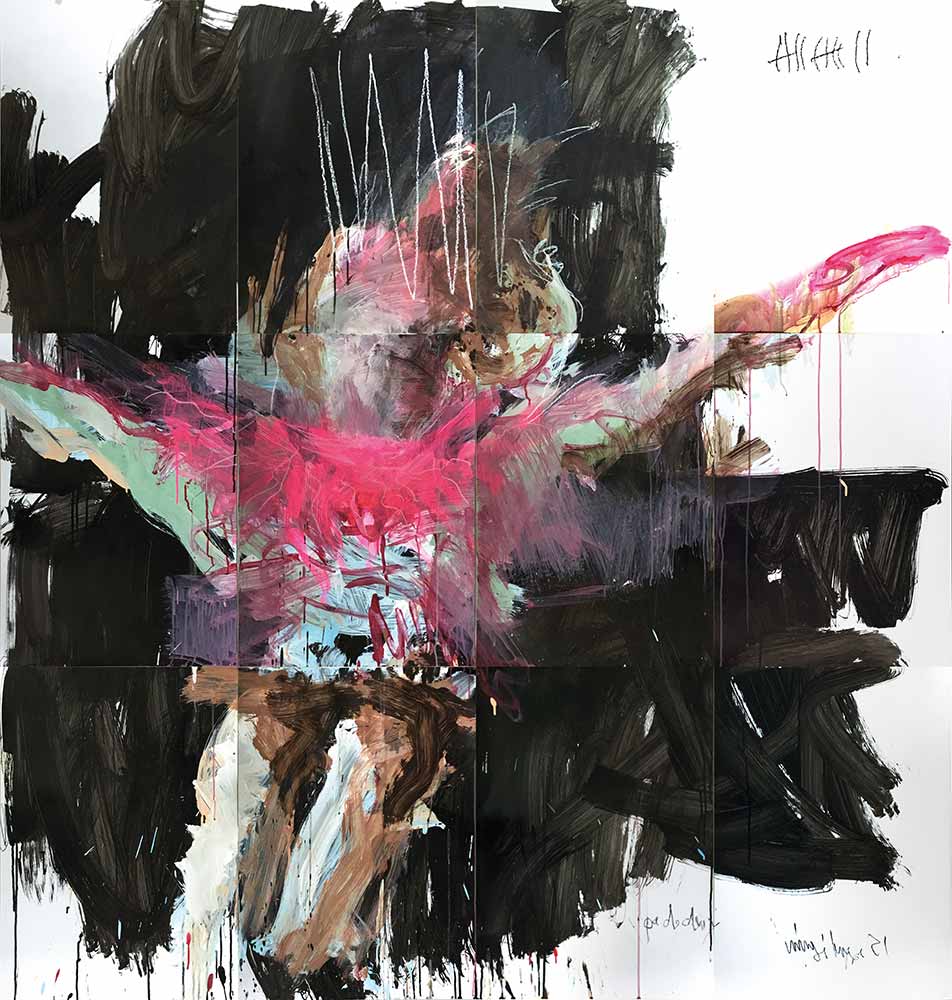
Pas de deux / 2021, Acrylic, ink and chalk on cardboard / 200 x 210 cm /
-
Nude one /
2018, Acrylic on sketching paper /70 x 100 cm / -
Venus (menopause) having a conflict with Adonis / 2021, Acrylic on canvas / 240 x 145 cm
-
(left) Brett vorm Kopf /
2022, monotype / 50 x 70 cm(right) Boxer boy /
2022, monotype / 50 x 70 cm -
SELF CONFIDENCE / 2020, Acrylic on Hanhnemühle (300 g) / 300x 180 cm /
-
AMATÖR – Don’t think twice / 2021, Acrylic, ink and chalk on cardboard / 140 x 200 cm /
-
Messalina / 2021, Edition; Giclee-Print on Hanemühle (300 g) / 100 x 70 cm /
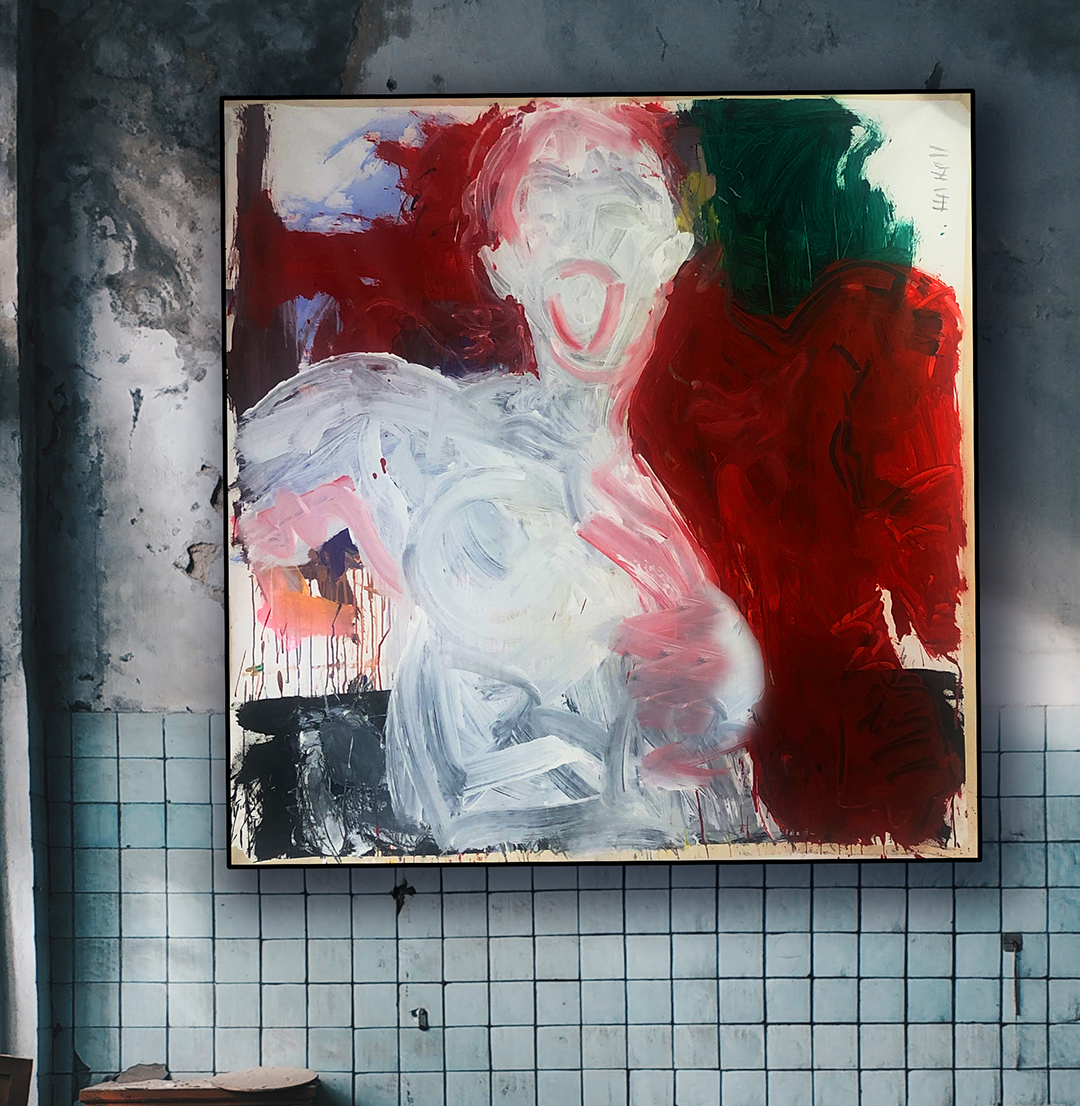
Shave ur head and man up, girl. / 2021, Acrylic on canvas / 160 x 170 cm /
-
Where is the apple tree? / 2020, Acrylic on Hannemühle (300 g) /300 x 180 cm /
-
Traktorist IV aus dem befreundeten sozialistischen Bruderland nach der Sauna auf dem Stoppelfeld / 2021, Acrylic on cardboard /6 x 50 x 70 cm /
-
Nieselregen, 5 Grad. Scheiße der Lidstrich verwischt.
2022, Acrylic on Hahnemühle/140 x 180 cm
Between quantum foam and tangible thinghood - this is the grey zone in which Mongi Higgs' painted transformations emerge.
Where or what is reality is the core question of his art? „The decisive moment for me is the phase of the emergence of being, of being conscious. When reality emerges from nothingness, one can recognise the essence and truth of being human in this brief moment. And that is what I want to uncover with the power of art,“ says Higgs. In the spirit of Bertold Brecht: „Reality is not how things really look, but how they really are.“ Higgs’s art condenses the „quantum foam“ to „reality“, in which the essence of creation emerges in its primordial form. The search for the moment between the real existing nothingness and becoming/being conscious and what remains of it in the course of life – this characterises his powerfully painted reductions. The 12 is the symbol for this, the materialisation point of reality, so to speak, which has to be found. Just as the 12 on the clock separates the night from the day and the 12th month divides the years, so 12 stands for Mongi Higgs as the zero point of creation in which everything becomes aware. Twelve – shortly before and shortly after: his works are arrested in this microcosmic chronography. The identification with this period of time goes so far that Mongi Higgs now only signs his pictures with the number 12 – in the form of 12 beer strokes.
Between quantum foam and tangible thinghood - this is the grey zone in which Mongi Higgs' painted transformations emerge.
Where or what is reality is the core question of his art? „The decisive moment for me is the phase of the emergence of being, of being conscious. When reality emerges from nothingness, one can recognise the essence and truth of being human in this brief moment. And that is what I want to uncover with the power of art,“ says Higgs. In the spirit of Bertold Brecht: „Reality is not how things really look, but how they really are.“ Higgs’s art condenses the „quantum foam“ to „reality“, in which the essence of creation emerges in its primordial form. The search for the moment between the real existing nothingness and becoming/being conscious and what remains of it in the course of life – this characterises his powerfully painted reductions. The 12 is the symbol for this, the materialisation point of reality, so to speak, which has to be found. Just as the 12 on the clock separates the night from the day and the 12th month divides the years, so 12 stands for Mongi Higgs as the zero point of creation in which everything becomes aware. Twelve – shortly before and shortly after: his works are arrested in this microcosmic chronography. The identification with this period of time goes so far that Mongi Higgs now only signs his pictures with the number 12 – in the form of 12 beer strokes.